EVERYDAY RITUALS · Self-care
A calmer bedtime routine, with simple skin care
Create a simpler wind-down routine, from setting screens aside to caring for your skin and choosing a quiet activity.

After a day full of decisions, you may want a little time without messages to answer or another task to rush into. An evening routine does not need many steps. Begin with small habits you can repeat and the skin care you actually need.
Start with a realistic wind-down time
NHS guidance recommends broadly consistent bedtimes and waking times, a wind-down period, less screen use and a quiet, dark room at a comfortable temperature when it is time to sleep.
You do not need to get everything right on the first night. Choose one change, such as putting your phone away after a shower or preparing tomorrow’s clothes before going to bed, then fit other activities around your life.
A simple evening routine
1. Put unfinished tasks on paper
Write a short list for tomorrow, distinguishing what matters from what can wait. For example: prepare documents before leaving, or return a call at lunchtime. This is a way to organise tasks, not a demand to stop every thought immediately.
2. Cleanse and moisturise as usual
Keep the steps that suit your skin. You do not need a new formula every night. If you use a prescribed treatment, follow that plan before adding other products. You can review your cleansing routine in our face-washing guide.
3. Choose one quiet activity
Read a book, listen to something gentle or sit quietly. Choose what feels comfortable that evening without trying to copy someone else’s complete routine.
4. Prepare your space
Clear unnecessary items from your bedside and keep what you need within reach. The illustration shows a reading moment before bed; adjust the lighting for sleep when you are ready.
Where do the CHUEN products fit?
Having three choices does not mean using all three every night. Choose by purpose and follow the actual product label.
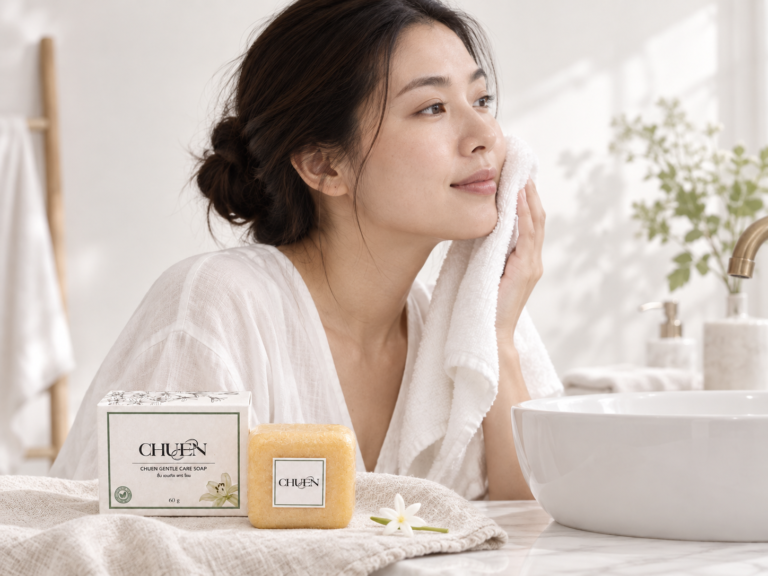
- Gentle Care Soap: the rinse-off cleansing step. Read the ingredient guide, especially if you are sensitive to fragrance.
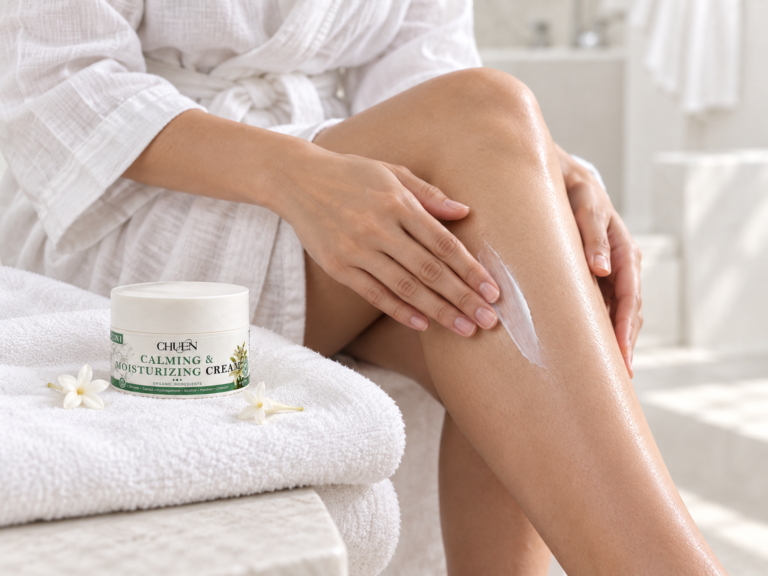
- Calming & Moisturizing Cream: face and body moisturising care according to the brand. Read about post-shower dryness.
- Soothing Cream: an optional body cream for those who enjoy its feel and scent. Follow the label, and skip it if your existing routine is enough. Check its ingredient information.
The names “Calming” and “Soothing” are not evidence that these products improve sleep or treat insomnia. Their role here is skin care. Preparing for bed involves habits and your environment.
A restful moment does not require fragrance
If a scent causes discomfort, headache or irritation, leave it out. Choose what feels comfortable for you. If you have migraine, read our guide to triggers and appropriate self-care.
If sleep does not come
NHS guidance advises against forcing yourself to sleep. Try a quiet activity in a comfortable place and return to bed when sleepy. If sleep problems persist or affect daily life, speak with a healthcare professional.
Frequently asked questions
Do I need a scented cream every night?
No. Choose skin care for your skin’s needs and follow its directions. Using cream is not a requirement for rest.
What if I only have a little time?
Choose one habit that makes life simpler, such as preparing for tomorrow or putting your phone away, while keeping essential skin care. This is a routine idea, not a promise of falling asleep within a set time.
Will all three products help me sleep better?
We have no evidence to support that conclusion. Do not add products in pursuit of a sleep effect. Compare their purposes in the product guide.
Self-care can be as simple as comfortable skin, an activity you enjoy and permission to put work aside. You do not need to complete every item on a list.
Sources and further reading
Product information: labels and documents supplied by CHUEN. Ingredient descriptions and general care guidance are not finished-product efficacy claims.