EVERYDAY RITUALS · Self-care
Migraine self-care: recognising triggers and getting help
Know what to do when migraine strikes, keep track of possible triggers and recognise when to seek medical help. Skin care is separate from treatment.
When a headache makes you want to put everything down, you may wonder how to handle migraine. Start by noticing your symptoms and choosing appropriate help. You do not need to complete a self-care routine or look for a product to replace treatment.
Could this be migraine?
Migraine can involve throbbing pain, often more noticeable on one side, nausea and sensitivity to light or sound. A one-sided headache alone does not establish the diagnosis. If you have not been diagnosed, seek medical assessment, especially when the pattern changes.
What to do when symptoms begin
- Rest somewhere quiet and dim. Lying down in a darkened room may help; reduce activities that worsen symptoms.
- Keep an eye on water and meals. Stay hydrated, maintain regular meals and notice how caffeine affects you.
- Follow your treatment plan. Use medicines as advised by a clinician or pharmacist, without increasing the dose or frequency yourself.
Seek medical review if symptoms become more severe, are hard to control or occur more than once a week. Frequent painkiller use can itself contribute to more headaches. See the NHS guidance linked below.
Keep a useful headache diary
A notebook or phone note is enough. The aim is to describe events clearly when speaking to a clinician rather than trying to remember every episode.
- When the headache started and when it improved.
- How severe it felt and which activities became difficult.
- Other symptoms, such as nausea or light sensitivity.
- Events beforehand, including sleep, meals and scents you encountered.
- What you did or medicines you took, and what happened afterwards.
Record observations before drawing conclusions. One episode does not prove a particular food or activity was the cause. Discuss patterns with the professional managing your care.
Does fragrance help everyone relax?
No. Research has found that certain odours, particularly perfume, can trigger migraine in some people. If a scent brings on headache, nausea or discomfort, avoid it. You do not need to tolerate it because a product is described as relaxing.
Where does Soothing Cream fit?
CHUEN Soothing Cream is a scented skin care product, not a medicine to treat or prevent migraine. We do not recommend applying it to relieve a headache.
Someone who enjoys scented products without irritation may choose to use it according to its label during an ordinary, symptom-free skin care routine. Keep that separate from migraine treatment. If you are sensitive to scents, skip it and choose an unscented way to rest. Read the ingredient guide before deciding.
When is urgent help needed?
Seek emergency assessment for a sudden, extremely severe headache, or a headache with weakness, speech problems, confusion, loss of vision, a seizure, high fever with a stiff neck, or following a head injury. Do not wait for cream or rest to resolve these symptoms. A migraine lasting longer than 72 hours needs prompt medical advice, as described in NHS guidance.
Frequently asked questions
Can a relaxing cream replace migraine medicine?
No. Soothing Cream is a cosmetic, and this article provides no evidence that it treats migraine. Follow medical treatment advice.
I enjoy scents but cannot tolerate them on some days. What should I do?
Pay attention to how you feel that day. Stop using a scent that causes discomfort and note it in your diary.
What should I bring to an appointment?
Your symptom diary, a list of medicines and products you use, and questions about what to do when symptoms start and when to seek further help.
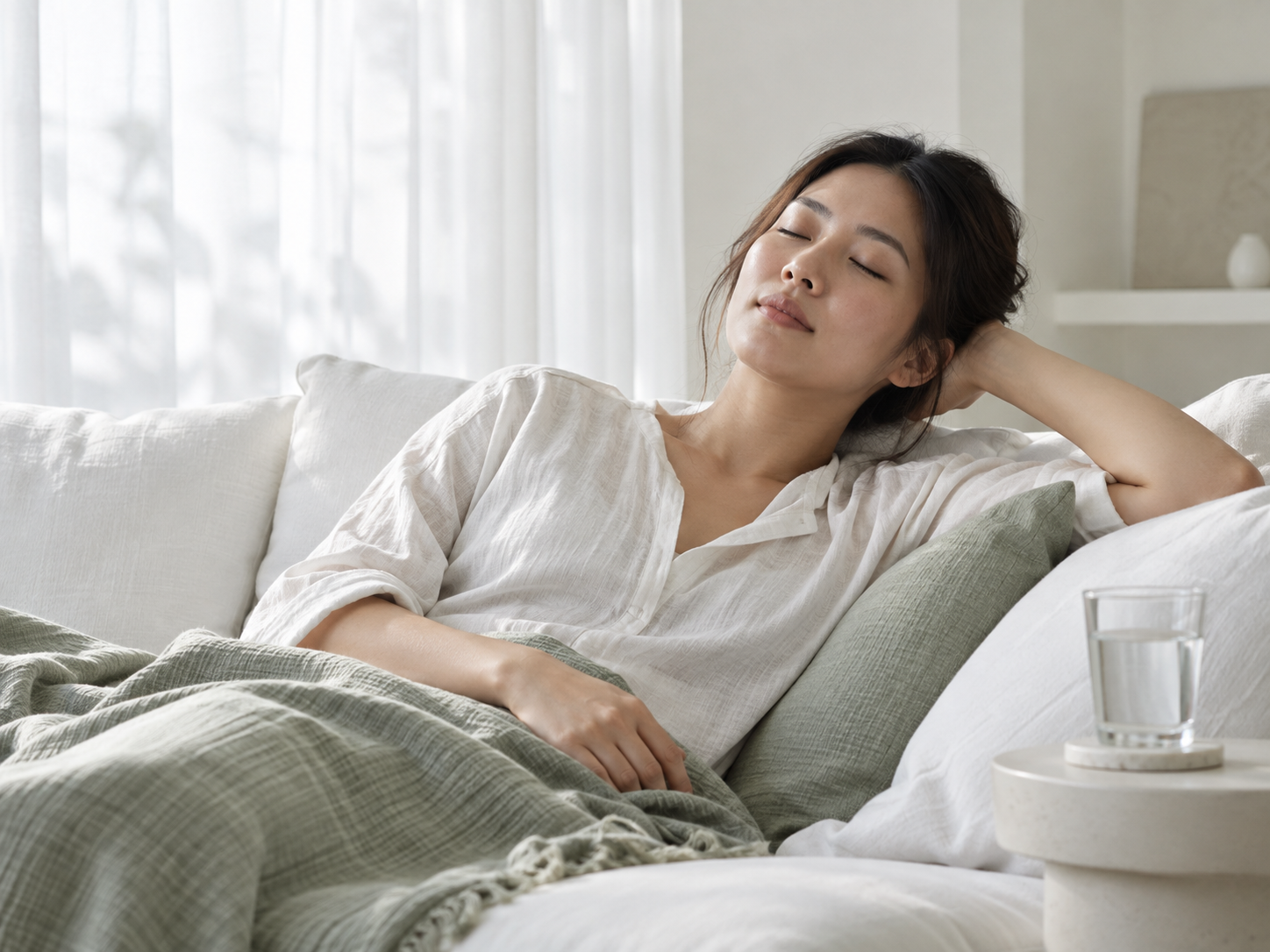
Note: This is general information, not an individual diagnosis. The illustration is a staged representation of rest.
Sources and further reading
Product information: labels and documents supplied by CHUEN. Ingredient descriptions and general care guidance are not finished-product efficacy claims.